Guides · Status
Is Borobudur One of the 7 Wonders of the World?
A fact check on one of the most repeated claims about the temple, with the designations Borobudur actually holds.
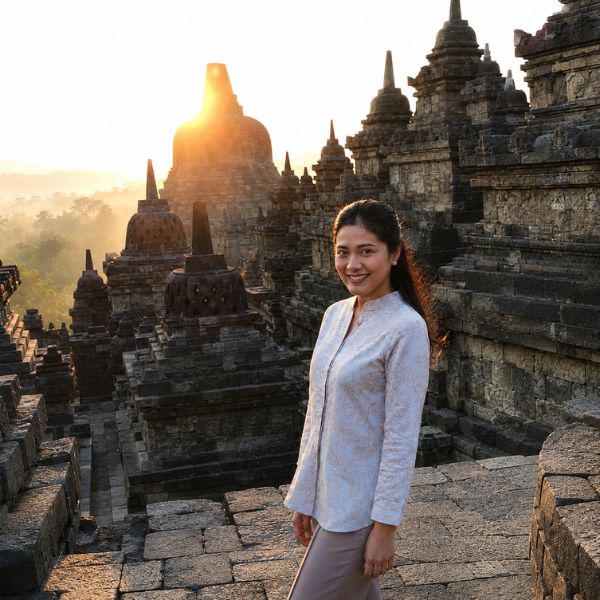 Written with Dewi Lestari, Borobudur temple tour guide since 2022
Short answer
No, and it never was. Borobudur was not a winner of the 2007 New7Wonders campaign, and it did not even appear among the campaign's 21 official finalists. It was not on the ancient Greek list of seven wonders either. What it actually holds is better documented: it is a UNESCO World Heritage site, inscribed in 1991 as the Borobudur Temple Compounds, and it is the largest Buddhist temple in the world. The \"wonder of the world\" label comes from informal lists, not from any official designation. That a monument this large could still be lost under ash and jungle for centuries is arguably the more wondrous fact.
Where The Claim Comes From
Ask around Indonesia and you will hear, with total confidence, that Borobudur is one of the seven wonders of the world. The belief is sincere and its roots are easy to trace. Informal "wonders" lists have circulated for more than a century, Indonesian school materials and tourism copy repeated the label for decades, and a monument this size makes the claim feel obviously true. But "seven wonders of the world" has never been one fixed list. The ancient version named seven Mediterranean and Middle Eastern works, all far older than Borobudur. The modern version most people mean is the New7Wonders campaign, decided by global vote in 2007. Borobudur appears on neither.
The 2007 Vote, Precisely
The New7Wonders Foundation announced its winners in Lisbon on 7 July 2007: the Great Wall of China, Petra, Chichen Itza, Christ the Redeemer, the Colosseum, Machu Picchu, and the Taj Mahal, with the Pyramids of Giza granted honorary status. The foundation's own records also list the 21 finalists the world voted on. Borobudur is not among the winners and was not among the finalists. Angkor Wat, its frequent point of comparison, did make that finalist list; Borobudur did not. Pages claiming it was "nominated" or "reached the final round" are contradicted by the official roster.
What Borobudur Actually Holds
| New7Wonders winner (2007) | No. Not among the 7 winners or the 21 official finalists |
|---|---|
| Ancient seven wonders | No. That list predates Borobudur by roughly a millennium |
| UNESCO World Heritage | Yes. Inscribed 1991 as the Borobudur Temple Compounds, including the Mendut and Pawon temples |
| Size record | Largest Buddhist temple in the world |
| Informal "wonder" lists | Appears on many; none carries official standing |
Why The Honest Version Is Still Impressive
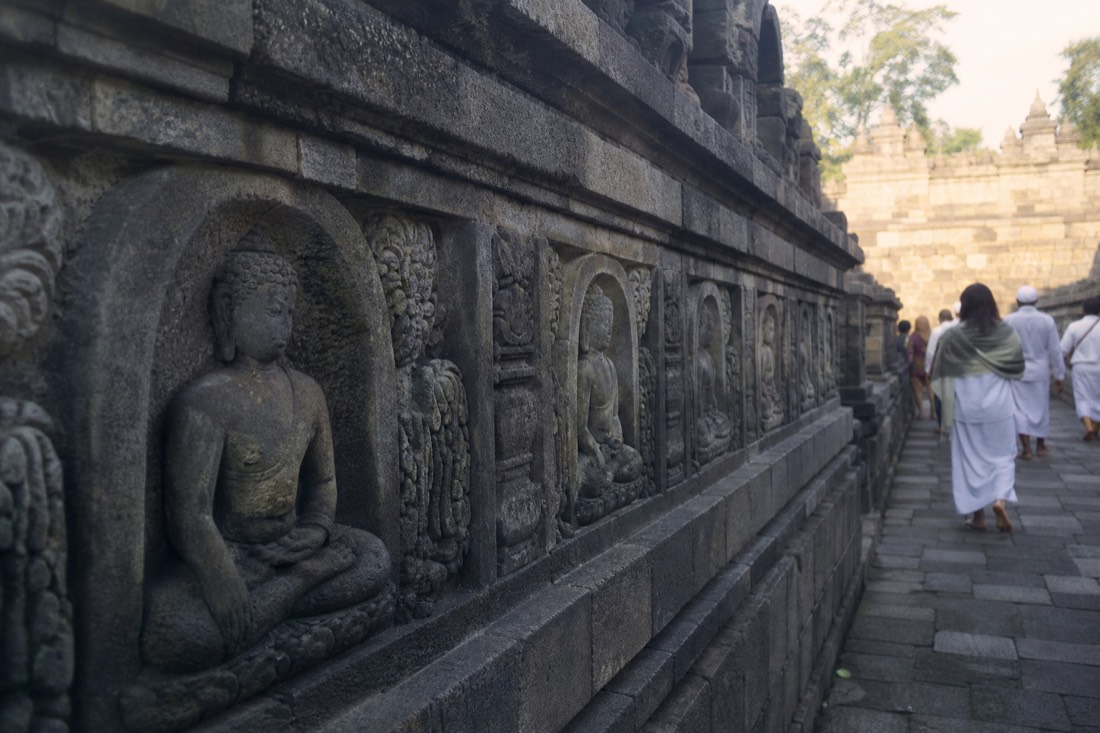
Losing the "seven wonders" label costs Borobudur nothing that matters. A UNESCO inscription is a documented judgment of outstanding universal value; a campaign it never entered is not. And the monument's real claims stand on their own: the largest Buddhist temple ever built, a ninth-century structure carrying 1,460 narrative relief panels, still climbable today with a guide included in the ticket. The Sunrise Climb & Prambanan tour handles that climb from Yogyakarta; check live availability & prices on GetYourGuide. And if those facts have you weighing the trip, our plain-spoken take on whether Borobudur is worth visiting covers the case for and against.
What Are The Different "7 Wonders" Lists, And Is Borobudur On Any?
Three separate lists get folded into one phrase, and Borobudur sits on none of them. The ancient seven wonders were classical Mediterranean and Middle Eastern works. The 2007 New7Wonders came from a worldwide poll. UNESCO World Heritage is a documented cultural judgment. Only that last list includes Borobudur, and it is the one that actually carries weight.
The ancient list is the oldest source of confusion. It named seven works around the Mediterranean, the Great Pyramid of Giza among them, catalogued by Greek writers long before Borobudur's first stone was laid. A ninth-century Javanese temple could not have qualified for a list closed roughly a thousand years earlier.
The modern list people usually mean is the New7Wonders of the World, a private campaign decided by public vote and announced in 2007. Here is what actually won:
| Winner (2007) | Country | Rough era |
|---|---|---|
| Great Wall of China | China | Built over many centuries |
| Petra | Jordan | Carved from the 1st century BC |
| Christ the Redeemer | Brazil | Completed 1931 |
| Machu Picchu | Peru | 15th-century Inca |
| Chichen Itza | Mexico | Maya, roughly 600 to 1200 CE |
| Colosseum | Italy | Completed around 80 CE |
| Taj Mahal | India | Completed in the 1650s |
The Pyramids of Giza were granted honorary standing so the ancient list would not compete with the new one. Borobudur was not a winner, and it did not appear among the 21 official finalists the public voted between. Angkor Wat, its usual regional rival, did reach that finalist round. Borobudur did not enter it at all. So the honest map reads: three lists, one label, and Borobudur present only on the UNESCO record.
What Titles Does Borobudur Actually Hold?
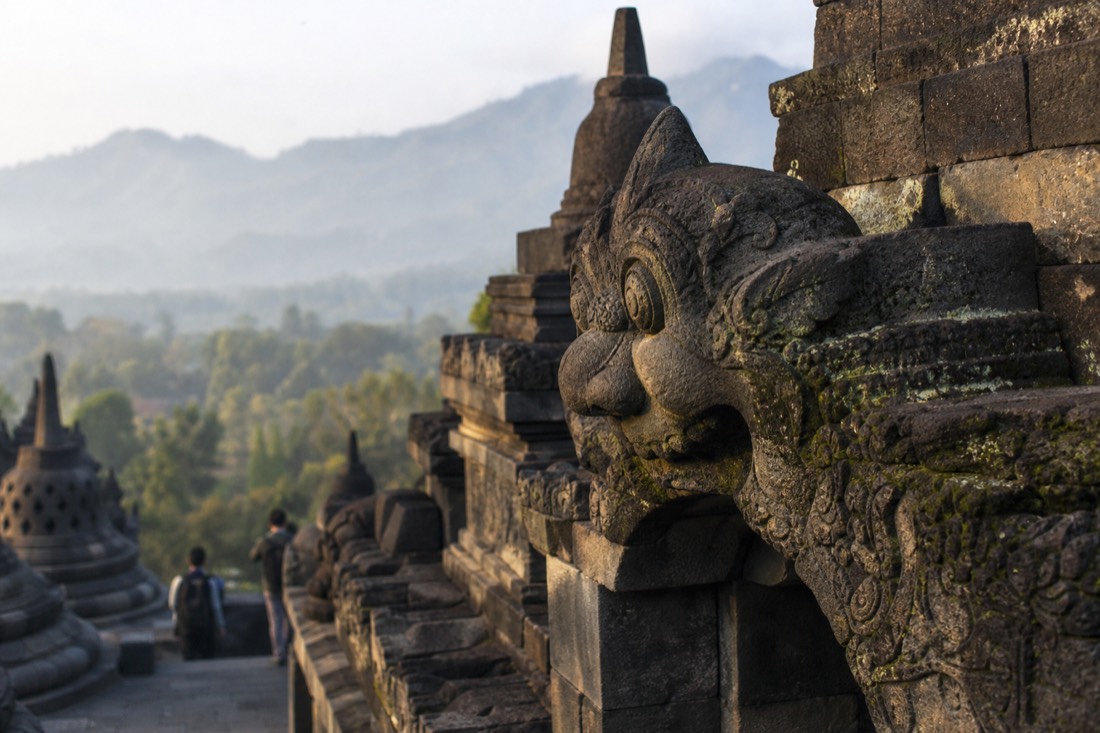
Its real credentials outrank a marketing poll. Borobudur is a UNESCO World Heritage site, inscribed in 1991 as the Borobudur Temple Compounds, and it is the largest Buddhist temple in the world. Those are documented designations backed by heritage review, not the outcome of an online vote.
The UNESCO inscription is the serious one. It followed years of restoration and it recognizes outstanding universal value, the same standard applied to Angkor and the Taj Mahal. The listing covers more than the main monument. It takes in the smaller Mendut and Pawon temples nearby, which sit on the same axis and were built as part of one Buddhist landscape.
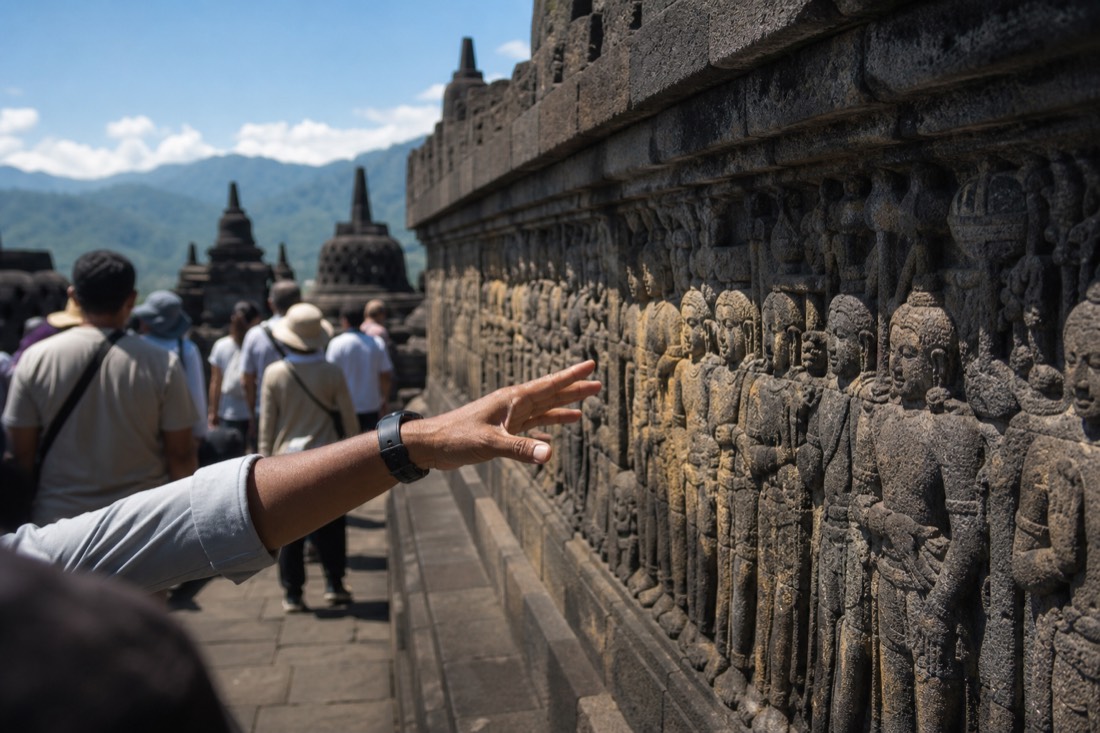
The size record is not a slogan either. Borobudur is a single stepped stone structure rising through galleries of carved narrative panels to a crowning terrace of stupas. Built in the ninth century under the Sailendra dynasty, it was constructed as a Mahayana Buddhist monument meant to be walked, level by level, as a physical journey through Buddhist teaching. Here is the short version of what stands up and what does not:
| Claim about Borobudur | Standing |
|---|---|
| New7Wonders winner or finalist | False on both counts |
| One of the ancient seven wonders | False, wrong era entirely |
| UNESCO World Heritage site | True, inscribed 1991 |
| Largest Buddhist temple in the world | True |
| Ninth-century Mahayana monument | True |
None of the true entries came from a poll. Every one of them can be checked against the heritage record, which is exactly why they hold when the "wonder" claim collapses.
How Does Borobudur Compare To The Wonders People Assume It Rivals?
Set beside the monuments travellers picture in the same breath, Borobudur holds its own on age and scale while sitting in a different category from most of them. It is older than Angkor Wat, older by centuries than the Taj Mahal, and it carries a size record none of the others can take from it.
People often line Borobudur up against Angkor Wat, the temple fields of Bagan, or the Taj Mahal. Each belongs to a different faith, era, and purpose, so a straight ranking misleads. A side-by-side view is fairer:
| Monument | Rough age | Type | Recognized status |
|---|---|---|---|
| Borobudur | 9th century | Buddhist temple | UNESCO 1991, largest Buddhist temple |
| Angkor Wat | 12th century | Hindu, later Buddhist temple | UNESCO 1992, largest religious monument |
| Bagan | 9th to 13th century | Buddhist temple landscape | UNESCO 2019 |
| Taj Mahal | 17th century | Mughal mausoleum | UNESCO 1983, New7Wonders winner |
Read across the rows and the picture sharpens. The Taj Mahal is the only one on that list to win the 2007 vote, and it is also the youngest by several hundred years, which says more about the campaign's reach and modern fame than about relative age or ambition. Angkor Wat is larger overall but is the world's largest religious monument of any kind, a different title from Borobudur's. Bagan spreads its wonder across thousands of separate structures rather than concentrating it in one. Borobudur's distinction is specific and defensible: no single Buddhist temple anywhere is bigger. That is a cleaner claim than "one of the seven wonders" ever was, because it points to a fact you can measure rather than a result you had to campaign for.
What I Tell Visitors Who Arrive Expecting A "Wonder"
When guests reach the top and ask me which of the seven wonders they are standing on, I tell them the honest answer and then show them why it does not matter. Guiding here since 2022, I have watched that small disappointment turn into something better once people see what the stone actually holds.
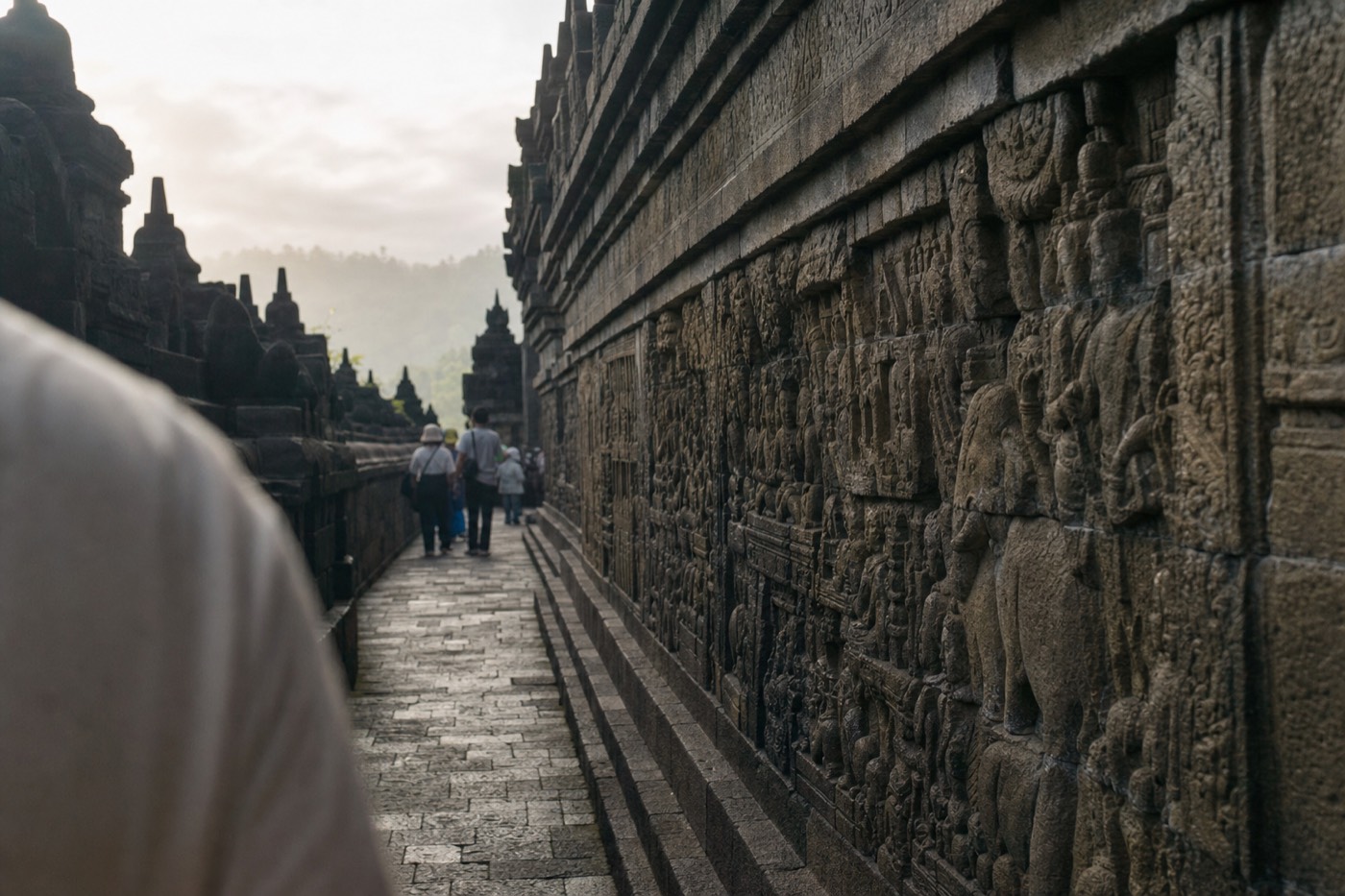
I have taken well over a thousand travellers up these terraces, and the "seven wonders" question comes up almost every morning. My answer is always the same. Borobudur was never on that list, and once we start reading the relief panels together, nobody minds. The carvings run for level after level, telling Buddhist stories in stone that a pilgrim was meant to follow on foot. That is not a poster attraction. It is a ninth-century teaching walk you can still take.
What I ask visitors to notice is the thing a vote could never capture. This monument was buried, forgotten, and pulled back from ash and jungle, and it is still the largest Buddhist temple on earth. When guests leave, they stop asking whether it is a wonder. They have felt why the real titles, the UNESCO record and the size, mean more than a marketing campaign it never entered.
Common Questions
Is Borobudur still one of the 7 wonders of the world?
It never was one. It was neither a winner nor a finalist in the 2007 New7Wonders vote, and it was not on the ancient list. Its verified designations are UNESCO World Heritage site (1991) and world's largest Buddhist temple.
What are the actual New 7 Wonders of the World?
The Great Wall of China, Petra, Chichen Itza, Christ the Redeemer, the Colosseum, Machu Picchu, and the Taj Mahal, announced in Lisbon on 7 July 2007, with the Pyramids of Giza honorary.
When did Borobudur become a UNESCO World Heritage site?
In 1991, as the Borobudur Temple Compounds. The listing takes in the main monument and the nearby Mendut and Pawon temples.
Your Next Step
Make The Day Fit Your Trip
Initial editorial recommendation, not a personalized eligibility check.
Borobudur-Only Private Half Day
Have your travel date in mind? Keep the trip to one monument, with a guided climb and private return transport from Yogyakarta. Check the exact option before arranging the rest of your stay.
About 5 hours including travel. English guidance, Borobudur climb admission and Yogyakarta hotel pickup. Meals excluded.
Select “Borobudur Only Half Day Tour” (TG4) on the listing; its headline also advertises the longer combined tour.
Choose a date to see Viator’s scheduled departures. Availability and final price are confirmed on Viator.
Adjust The Plan, Compare Options & Costs
Optional filters change the recommendation. Blank answers keep the general editorial choice. No personal details are saved.
What Changes Between The Options
- Borobudur-Only Private Half Day: About 5 hours including travel. English guidance, Borobudur climb admission and Yogyakarta hotel pickup. Meals excluded. Select “Borobudur Only Half Day Tour” (TG4) on the listing; its headline also advertises the longer combined tour.
- Private Borobudur Climb & Prambanan Day: About 8 hours. English driver/guide; temple admission and the Borobudur climb included. Lunch and a local Prambanan guide cost extra. Mendut monastery substitutes for the temple during renovation. Choose the full-day option (TG1). Monday has a separate option with different Prambanan access. Confirm the exact itinerary for your date.
- Borobudur Climb & Prambanan Options: 5–12 hours depending on option. English guide/driver and Yogyakarta pickup. Temple tickets are included only with the all-inclusive option; lunch extra. Select the actual sunrise, group type and ticket bundle you want. Setumbu is a hill outside the temple; confirm Monday access for your date.
- Angkor Sunrise Or Sunset From Siem Reap: About 8 hours. Hotel pickup, guide, water and towels; Angkor pass and meals excluded. Sunrise/sunset and private/small-group options. Choose the timing and group type on Viator. This is a Cambodia outing, with no transport from Java.
Compare Your Own Quotes
Enter total party costs in the same currency, including matching tickets, transport and extras. This compares your figures, not live prices.
Affiliate links: we may earn a commission if you book, at no extra cost to you. Provider terms, itinerary and final availability apply.